Grip Strength and Biological Age | Inside the System by WS9 Fitness
The Forgotten Superpower
Grip Strength and Biological Age
Intro: The Small Signal That Reveals Everything
If you wanted a single metric that quietly reveals how well a human body is ageing, you wouldn’t look at bodyweight, flexibility, or even aerobic fitness first.
You would look at grip strength.
Over the past two decades, grip strength has emerged in medical and performance research as one of the most reliable predictors of biological age, functional independence, and even all-cause mortality.
Yet in most gyms, it’s barely discussed.
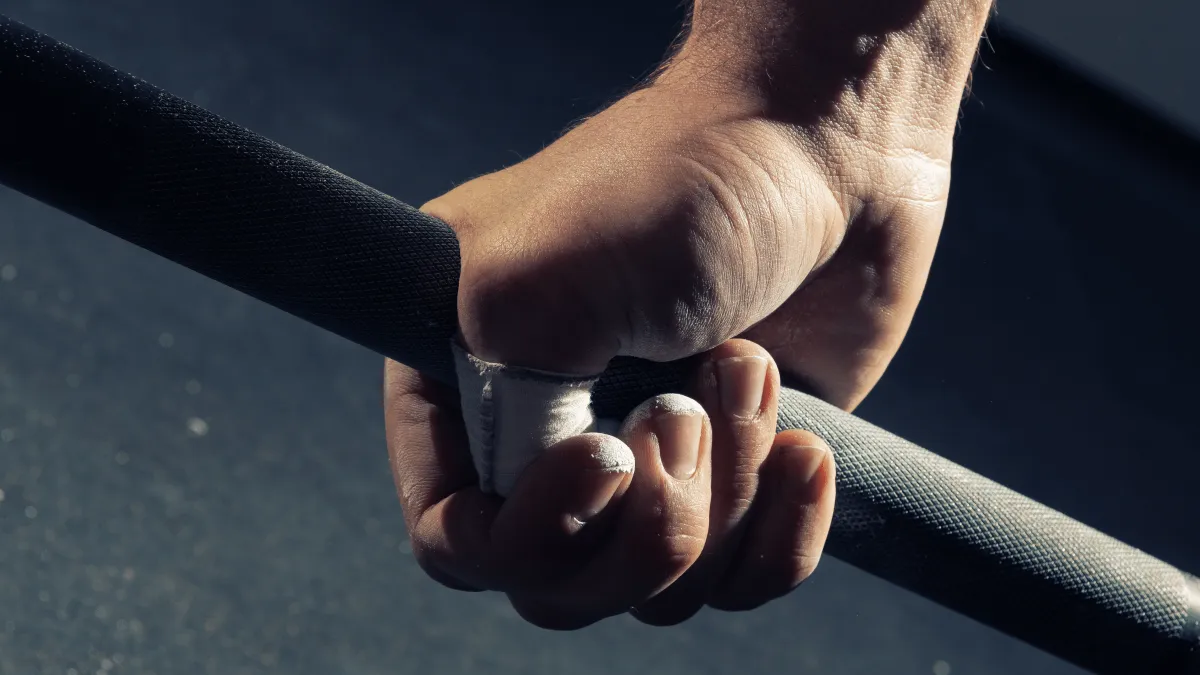
At WS9 Fitness, it’s deliberately trained, because grip strength is not just about hands. It’s a proxy for nervous system integrity, total-body strength, and resilience under load.
1. Grip Strength as a Window Into the Nervous System
Grip strength is fundamentally neurological.
Your hands contain a dense concentration of sensory and motor neurons, directly linked to the motor cortex.
When you grip something heavy, the nervous system must coordinate:
Hand and forearm musculature
Shoulder stabilisers
Core tension
Postural alignment
Breath control
This is why grip strength correlates so strongly with overall strength and coordination.
A weak grip often reflects a nervous system that struggles to organise force efficiently, not just weak forearms.
In other words, grip strength is a systems test, not an isolated muscle test.
2. The Research: Grip Strength and Longevity
Large population studies have consistently shown that lower grip strength is associated with:
Higher risk of cardiovascular disease
Increased incidence of disability
Greater likelihood of falls
Accelerated cognitive decline
Increased all-cause mortality
In some studies, grip strength outperformed blood pressure and BMI as a predictor of mortality risk.
Why?
Because grip strength reflects the combined health of the muscular, neurological, and cardiovascular systems... the same systems that determine how well a body copes with stress over time.
Grip strength doesn’t lie.
It exposes decline early, often before symptoms appear.
3. Grip Strength Is Total-Body Strength Expressed Distally
The hands are the final link in the kinetic chain.
If force cannot be transmitted efficiently from the ground, through the legs, core, and shoulders, the grip will fail first.
This is why heavy deadlifts, farmer carries, and pull variations demand so much from the grip.
It’s also why grip strength often limits performance before larger muscle groups fatigue.
At WS9, we view grip as an output signal... a reflection of how well the entire system is functioning under load.
Strong grip equals integrated strength.
Weak grip exposes leakage somewhere in the chain.
4. Grip Strength and Ageing
As we age, decline doesn’t happen evenly.
The nervous system slows, reaction time drops, and fine motor control fades before major muscle loss becomes obvious.
Grip strength sits right at this intersection.
It’s one of the first qualities to deteriorate if training becomes inconsistent or overly specialised.
But here’s the key insight:
Grip strength is highly trainable at any age.
Even older adults show rapid improvements when grip is trained intelligently... improvements that translate into better balance, confidence, and independence in daily tasks.
Longevity isn’t just about living longer.
It’s about retaining the ability to hold, carry, stabilise, and react.
5. Why Modern Training Neglects Grip
Machines remove the need to grip.
Straps bypass it.
High-rep fatigue work avoids heavy loading.
Over time, this creates a disconnect: muscles get stronger, but the nervous system loses its ability to organise force through the hands.
At WS9, we intentionally avoid outsourcing grip.
We want the hands involved, because the brain needs that feedback loop to stay sharp.
Grip isn’t an accessory.
It’s a foundational signal.
6. How WS9 Trains Grip Without Isolating It
Grip strength at WS9 is rarely trained in isolation.
Instead, it’s woven into the system through compound, functional movements that demand integration.
Examples include:
Deadlifts and hinge patterns that require sustained tension
Farmer carries that train grip, posture, and breathing simultaneously
Pulling variations that link hands to lats and core
Tempo work that increases time under tension without reckless load
This approach respects the nervous system.
Grip becomes strong because the system becomes strong.
7. Grip Strength, Confidence, and Psychological Resilience
There’s a psychological component to grip strength that’s often overlooked.
Holding something heavy - securely, calmly, and with control - sends a powerful signal to the nervous system: I can manage load.
That confidence transfers.
People with strong grip tend to move with more certainty, react with less hesitation, and tolerate stress better... both physical and mental.
This is not accidental.
The brain associates grip with survival: climbing, carrying, stabilising, protecting.
When grip weakens, the nervous system subtly interprets the world as less manageable.
Strengthen the grip, and you strengthen perceived capability.
8. Grip Strength as a Healthspan Marker
Healthspan is about how long you can function well.
Grip strength predicts that better than most metrics because it reflects:
Neural efficiency
Muscular integrity
Cardiovascular support
Confidence under load
At WS9, we don’t chase novelty.
We reinforce fundamentals that protect future capability.
Grip is one of those fundamentals... quiet, unglamorous, and incredibly powerful.
9. Measuring and Maintaining Grip Over Time
Grip strength is simple to assess and track.
Whether through timed carries, static holds, or consistent exposure to heavy compound lifts, changes show quickly when training is structured.
What matters most is consistency.
Like strength, grip adapts neurologically first, then structurally.
By integrating grip across training cycles, WS9 ensures this marker of biological age trends in the right direction, year after year.
10. Begin Measuring What Matters
If you’re ready to understand where you currently stand, and how to progress, start with the WS9 Fitness Scorecard.
In less than three minutes, uncover where you stand across four core pillars of performance: Movement, Mindset, Energy, and Consistency.
Your results will guide you into a 1-, 3-, or 5-session OnRamp, designed to rebuild foundations, reconnect movement patterns, and form habits that support long-term success.
You’ll also receive a free 28-Day Email Program designed to rebalance your system and unlock your next stage of performance before being invited to join the next available OnRamp.
When you train with the Longevity Equation in mind, you stop chasing short-term outcomes, and begin building a life you can sustain.
Grip strength doesn’t just measure how strong you are, it reveals how well your system is ageing.