The Glycolytic Engine | Inside the System by WS9 Fitness
The Glycolytic Engine
Training the Middle Gear for Real-World Fitness
Intro: Finding the Gear Between Strength and Endurance
Not every effort in training should be slow and steady.
Not every session should be maximal intensity.
Real-world fitness lives in the middle gear, the zone where strength and endurance overlap, where power meets sustainability.
Inside WS9 Fitness, that gear is built through glycolytic conditioning: training your body to handle effort that lasts between 30 seconds and 3 minutes, where oxygen alone isn’t enough and the body must call on stored fuel to perform.
When developed correctly, this system transforms how you move, recover, and perform in daily life.
It’s the bridge between the iron and the engine.
1. The Energy Systems that Power Performance
Every human movement runs on one of three overlapping energy systems (we can think of these like components of a house infrastructure - coloured names):
Phosphagen System (ATP-CP) Or Electricity: powers explosive effort up to 10 seconds - a heavy lift, sprint start, or jump.
Glycolytic System Or Plumbing: fuels moderate-duration, high-intensity effort - 30 seconds to 3 minutes.
Oxidative (Aerobic) System Or Ventilation: sustains long-duration, low-intensity activity.
The glycolytic system is often neglected, yet it’s the one that powers most real-world demands, climbing stairs quickly, chasing a child, finishing the final round of a circuit.
Training this system expands the buffer between strength and stamina, a crucial element of the WS9 method.
2. What Happens Inside the Glycolytic Zone
During moderate-to-high intensity work, your muscles demand energy faster than oxygen can be delivered.
To meet this demand, the body breaks down stored glucose (muscle glycogen) through glycolysis, creating ATP, the energy currency of every cell.
This process also produces lactate and hydrogen ions. The more efficiently your body can clear and reuse lactate, the longer you can sustain performance before fatigue sets in.
Consistent glycolytic training enhances this recycling ability, improving both performance and metabolic flexibility.
3. The Bridge Between Aerobic and Anaerobic Fitness
Think of your glycolytic system as a bridge between your slow, oxygen-based endurance and your explosive, short-burst power(the Plumbing that connects the Electrical and Ventilaltion systems together in our house analogy) .
Without that bridge, performance feels disjointed, strong but breathless, or enduring but weak.
At WS9 Fitness, our programming ensures you build the full spectrum of capacity.
By strengthening this middle gear, you can shift smoothly between high effort and recovery, between lift and movement, between intensity and control.
It’s the physiological equivalent of having more gears in your transmission - smoother, stronger transitions between effort levels.
4. Why the Middle Gear Builds Metabolic Health
Beyond performance, glycolytic training has profound effects on metabolic health.
When you train in this zone, your muscles become better at storing and using glucose, improving insulin sensitivity and blood-sugar regulation.
For many adults, especially those with sedentary jobs, this adaptation is vital.
It reduces the risk of Type 2 diabetes, improves energy stability, and enhances body composition by increasing lean muscle mass while reducing fat storage.
It’s not just about what happens in the gym, it’s about how your metabolism performs 24 hours a day.
5. How WS9 Fitness Trains the Glycolytic Engine
The WS9 approach blends structure with intensity.
We use protocols that stress the glycolytic system while maintaining quality movement and breathing control.
Examples include:
Interval repeats: 45- to 90-second efforts followed by equal or slightly longer recovery.
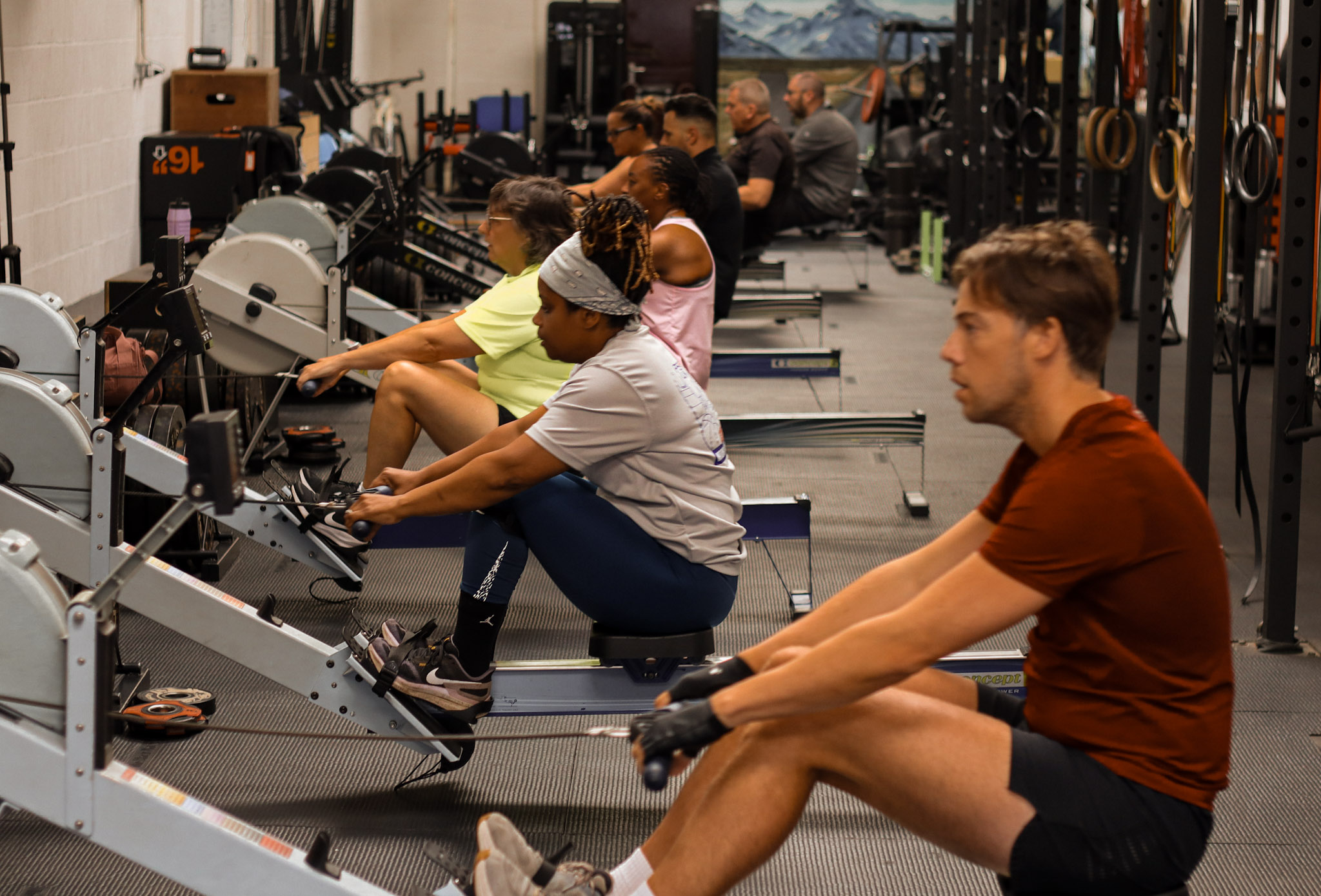
Mixed-modality circuits: combining kettlebell/dumbbell/barbell work, sled pushes, burpees or row-erg/ski-erg bursts for 2–3 minutes at near-max effort.
Lactate-clearance pairs: alternating strength lifts with conditioning intervals to teach the body to recover while still under load.
Each protocol is programmed to build tolerance progressively, never random, always measurable.
6. Breathing: The Gateway Between Systems
Breath control determines how efficiently you shift between aerobic and glycolytic states.
During glycolytic work, CO₂ builds up, triggering the urge to breathe faster. Training your breath to remain steady under that pressure improves oxygen delivery and tolerance to CO₂, extending your threshold before fatigue.
At WS9 Fitness, coaches cue nasal breathing and controlled exhales even in high effort intervals.
This practice not only refines performance but also trains your nervous system to stay calm under intensity, the hallmark of true conditioning.
7. The Neurological Side of the Middle Gear
Glycolytic work also challenges coordination and decision-making under fatigue.
When the body tires, the brain must work harder to maintain form, rhythm, and focus.
By training these moments intentionally, you strengthen both your physical and neural endurance.
That’s why every WS9 session emphasises technical integrity even when fatigue sets in.
It’s not about surviving the set, it’s about mastering your movement under pressure.
8. Common Mistakes in Glycolytic Training
Without structure, this form of training easily slips into chaos.
Here are the errors WS9 Fitness helps members avoid:
Going too long: Efforts beyond 3 minutes often drift into aerobic territory.
Skipping recovery: Insufficient rest between bouts prevents quality and reduces adaptation.
Losing form: Fatigue leads to poor movement patterns and reduced neural benefit.
Ignoring progression: Repeating the same effort weekly without measured increase stalls growth.
Precision, not punishment, creates performance.
9. Real-World Transfer: From Gym to Life
The glycolytic system powers life’s short, intense moments: lifting a suitcase, sprinting for a train, playing with children, reacting under pressure.
When trained, it enhances your ability to perform and recover quickly in every physical and emotional context.
Members often report not just improved conditioning, but greater mental readiness, they respond rather than react.
That’s the hidden gift of glycolytic training: it builds composure in chaos.
10. Begin Measuring What Matters
If you’re ready to understand where you currently stand, and how to progress, start with the WS9 Fitness Scorecard.
In less than three minutes, uncover where you stand across four core pillars of performance: Movement, Mindset, Energy, and Consistency.
Your results will guide you into a 1-, 3-, or 5-session OnRamp, designed to rebuild foundations, reconnect movement patterns, and restore rhythm in both body and mind.
You’ll also receive a free 28-Day Email Program designed to rebalance your system and unlock your next stage of performance before being invited to join the next available OnRamp program.
Because when you understand how your body creates energy and why you train the way you do, every session becomes an act of self-mastery.
Train your middle gear, and life’s intensity becomes something you move through, not something that moves you.