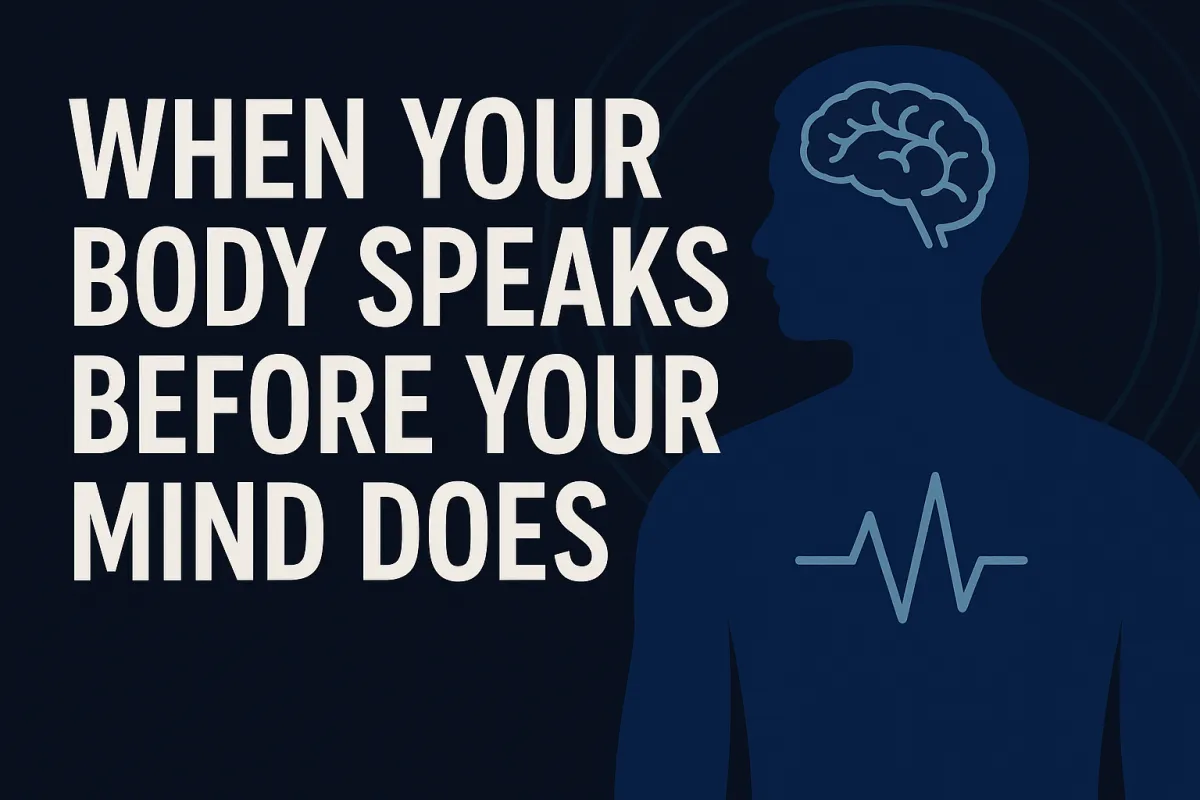
When Your Body Speaks Before Your Mind Does
When Your Body Speaks Before Your Mind Does:
A practical guide to understanding midlife fatigue, dips in performance, and signs your system needs attention
1. Introduction: When Effort Stops Matching Results
Plenty of people reach their forties and fifties with no major medical issues, yet experience things like
• frequent colds
• dips in energy
• trouble recovering
• dizziness, overwhelm, or shutdown moments
• increased sensitivity to noise or stress
• chronic tightness or inflammation
Blood tests often come back normal. Training is “fine on paper.” But something still feels off.
At WS9 Fitness, we see a pattern: your body often notices things your mind has been ignoring.
This is not weakness. It is information.
2. Why This Shows Up Between 40-60
This age range is a pressure point in human physiology and psychology.
People in midlife commonly face:
• peak responsibility
• reduced sleep quality
• accumulated stress load
• less recovery than their life demands
• emotional load that was never verbalised
• identity shifts: “Who am I now?”
• roles changing at home and at work
Your system becomes less tolerant of:
• ignoring stress
• overriding fatigue
• emotional suppression
• carrying everything alone
Midlife isn’t “breaking down.” It is reorganising you for the next chapter.
3. When the Body Sends Signals: The Three Common Patterns
These are general patterns we see across hundreds of WS9 Fitness members. They are not diagnoses, simply patterns worth paying attention to.
A. Immunity Fluctuations
If you are picking up every cold or virus:
You may be:
• carrying emotional load solo
• living in long-term stress
• multitasking without pause
• performing for others without recovery
The immune system drops when the emotional system is overloaded.
What you don’t release, your body ends up holding.
B. Nervous System Disruptions
Light-headedness, fatigue, shutdown sensations, feeling “wired but tired.”
This often appears in high-functioning people who:
• constantly override limits
• push through tiredness
• avoid slowing down
• treat rest like weakness
• hold themselves to impossible standards
Your body forces pauses where your mind refuses to.
C. Sensitivity to Noise / Sound / Overwhelm
This tends to show up when someone has:
• internal mental load
• too many open loops
• difficulty hearing their own needs
• long-term vigilance
• chronic overthinking
When your inner world is loud, outer noise becomes amplified.
4. The Fitness Lens: Stress, Recovery, and the Inner System
Every WS9 Fitness member learns this truth: training alone is not enough.
Your inner system must support the outer work.
There are three layers:
1. Physiological Layer
Long-term stress impacts:
• cortisol
• inflammation
• sleep
• immune function
• recovery
• blood pressure
• energy production
This alone explains a lot.
2. Psychological Layer
Unprocessed tension turns into:
• tightness
• fatigue
• immune dips
• loss of motivation
• overwhelm during sessions
What isn’t expressed is stored.
3. Lifestyle Layer
This includes:
• boundaries
• identity
• relationships
• coping patterns
• thinking habits
• self-worth
Your lifestyle either helps you recover
or quietly drains you.
5. What Healing and Rebalancing Actually Look Like
There is no mysticism here. Just practical human physiology and psychology.
A. Emotional Fitness
• write things down
• name what you feel
• speak honestly
• reduce the emotional load you carry alone
A clearer mind equals a stronger body.
B. Nervous System Recovery
• long walks
• breathing sessions
• silence
• nature
• structured training instead of chaotic training
Your nervous system determines your strength far more than your muscles do.
C. Identity Work
• stop basing worth on productivity
• let go of perfectionism
• understand that slowing down is strategic
• stop living entirely for others
Training is easier when you’re not fighting yourself.
D. Healthy Connection
• speak up
• seek support
• build consistency with people who lift you
• reduce emotional isolation
Humans heal faster when they’re not carrying life solo.
6. Practical WS9 Reflection Prompts
Pick one a day.
“Which part of my body is asking for attention today?”
“Where am I pushing past my limits instead of respecting them?”
“Which emotion have I been postponing?”
“What would improve instantly if I stopped pretending I’m fine?”
“Where do I need support but refuse to ask for it?”
7. Closing Message
Your body isn’t failing. It’s getting louder because you’ve become stronger, wiser, and more aware.
It is not a sign of weakness, but a sign that you’re adjusting to a new chapter of life where:
• training is smarter
• recovery is strategic
• boundaries are cleaner
• emotional fitness becomes a performance tool
• your inner world finally gets the respect it deserves
The outer system is only as strong as the inner one.
This is why we train both at WS9 Fitness.